It’s the perfect horror movie for Mother’s Day … obviously!
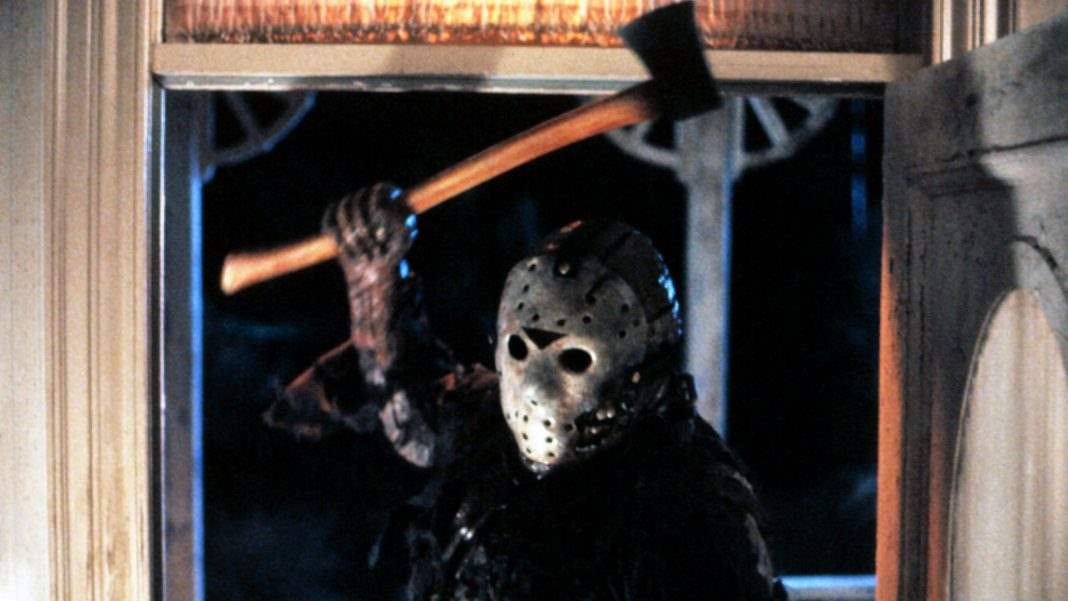
You really can’t tell the story of Mother’s Day without bringing up Friday the 13th.
Thematically, the movies are almost identical — they both revolve around murderous boy moms, they both involve women in peril in the woods of New Jersey, they both have Carrie-inspired jump scare endings. Not only were the two films shot and released around the same time, they were even filmed in close geographical proximity to one another.
Of course, the films had drastically different outcomes. One went onto become a pop cultural sensation that dominated the box office throughout the ‘80s, while the other … is Mother’s Day.
It’s a movie that never really got it’s fair shake, then or now. Roger Ebert infamously gave it a zero star review, which he bemoaned as “vile and depraved sadism.” As of publication time, the film held an astonishingly low MetaCritic score of 1 … out of 100. Even on Letterboxd, which is supposed to be something of a populist counterweight to old guard film snobbery, the movie averages a very lukewarm 2.7 out of 5.0 rating. Clearly, Mother’s Day is a movie still waiting for its proper regards. And who knows, it might be waiting forever.
Even among hardcore horror fans, who tend to be some of the most libertine of filmgoers, the movie can be a bit much for some viewers. People who unironically love Friday the 13th Part V and Sleepaway Camp II might see Mother’s Day as a bridge too far … a film that’s too dark, a film that’s too degenerate, a film that’s too disturbing. It’s a down and dirty movie, a sleazy and trashy spectacle that makes you feel bad for even witnessing it. It’s not chic pop-horror, that’s for sure.
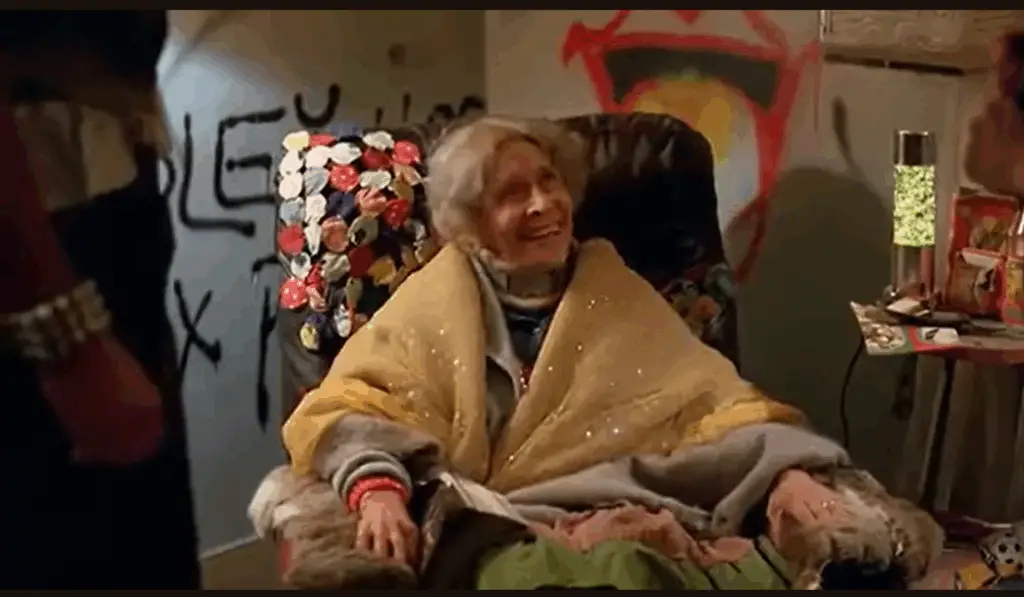

Obviously there are a lot of reasons why some people might consider Mother’s Day to be an offensive movie. And let’s be real, it is hard to play apologist for some aspects of the film. But that’s sort of the double-inverted tragedy that befalls the picture; it’s a film that’s despised for being too successful at what it aspires to be. The people who made this movie definitely wanted you to feel grossed out — and on that front, the film probably overdelivers. Even by Troma standards it’s an atypically nasty movie; even if you like the movie as a whole, you still have to admit that certain parts of the film are tough to sit through.
But it would be a mistake to write Mother’s Day off as totally irredeemable garbage. In fact, it’s actually a pretty intelligent little social satire — although, as dated as it is, you’d have to be aware of all of its cultural allusions to perceive it as such. It’s very much a product of its time that serves as a reflection of its time. And in that, it’s probably about as close to a “parody” of something like I Spit On Your Grave as any of us would feel comfortable watching.
On a superficial level there’s not much new with Mother’s Day. You’ve got violent yokels who live on the margins of society abducting — then torturing, abusing and murdering — young women simply for being young women. It’s material we’ve seen countless times before, yet with Mother’s Day it takes on a different kind of connotation. It feels like a meta-commentary on “rape-revenge” movies, a tongue-in-cheek riposte to all of those “hillbilly cannibal” flicks we got in the ‘70s. It’s a very, very morbid comedy that makes you forget it’s a comedy due to its unsavory violence and relentlessly bleak atmosphere. In some ways, it’s the popcorn subversion of something like Last House on the Left House — if people want to view a movie like that as vicarious entertainment, you might as well give them a movie that truly embraces the nihilism and decadence of it all.
If you’ve never seen the film before (or it’s been a long time since you have), you might be surprised by how much time is spent upfront focusing on the lives of the soon-to-be victims. There is a lot of investment in the characters, a lot of background so you have a solid idea of who they are as distinct individuals. They’re not one-dimensional bimbos at all, which is certainly a big change of pace from most movies of its ilk. They’re never positioned as deserving victims, as people whose moral failings make their violent ends seem a bit more “justified” in the long run. None of the heroines are ever “slut-shamed,” which is a real rarity for an early ‘80s genre picture. It may not seem like it at first glance, but Mother’s Day is a far more feminist picture than it appears.

Which, of course, is a segue into the most gruesome element of the film — the sexual violence.
There are some people who believe cinematic rape is exploitative, regardless of the filmmakers’ intent, the director’s message or the overarching themes of a film as a whole. And that’s a totally respectable position to take. At the same time, though, I think there’s an obvious continuum in play, especially for 1980s movies. Mother’s Day, as coarse and gristly as it is, isn’t something like Revenge of the Nerds, which LITERALLY depicts rape as “no big deal.” What we see in Mother’s Day, however, is MEANT to be nauseating and deplorable. It gets the point across that sexual assault is a sick and inhuman crime. It reiterates just how vile and reprehensible the villains truly are and the sympathy of the film rests entirely on their victims. The villains of this movie aren’t Patrick Bateman and even the chuddiest incel watching it wouldn’t want to relate to them. You can accuse Mother’s Day of a lot of things, but one thing it definitely doesn’t do is make sexual violence look inconsequential or, god help us, excusable.
The rest of the movie is every bit the gonzo gore-fest its reputed to be. What’s often overlooked, though, is just how much cultural commentary is included in the movie. After all, the movie begins with a parody of Werner Ehrhardt’s “self-improvement” movement — a pretty good place to recruit unwilling victims, considering its allegations of fraud, negligence and straight-up brainwashing of participants. Nor is it the only deep cut in terms of pop cultural representation sprinkled throughout the film. The twin murderous, rapist psychopaths of the picture are children’s breakfast cereal-devouring, devoted cartoon-watching and ardent toy-collecting men-children — sort of the ultimate “consumerism gone awry” cautionary tale. As secluded from the rest of humanity as they may be, they still live under the pervasive influence of General Mills and network television. Along those same lines, their respective demises — via Drano ingestion and literal TV trauma to the noggin — probably aren’t coincidental. And the less I say about that one death via inflatable novelty breasts, the better.
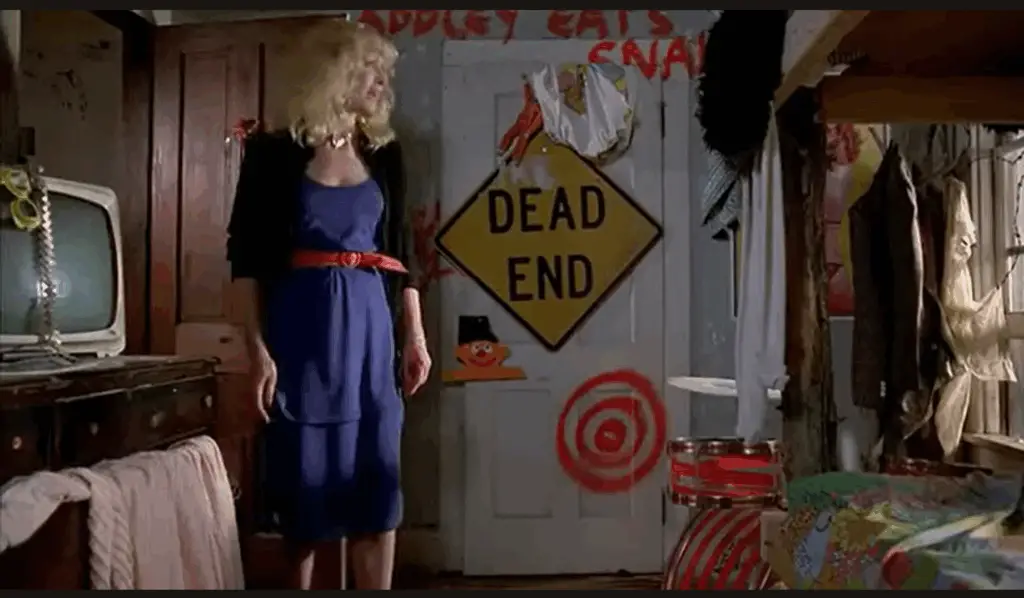
As cornball as the movie may be (it even has a “I Think We’re Alone Now” needle drop before it was covered by Tiffany), it’s still a gruesome little movie. There’s one scene involving a rope cutting into a woman’s hands that’s genuinely one of the most stomach-churning moments I’ve ever seen in a horror movie. And it’s hard to watch anybody get shanked by an electric carving knife and not get a little nauseous, even if they are deserving of it. Even if you don’t like it, you really can’t say Mother’s Day is a boring or predictable movie. It never pulls its punches, even when you kinda wish it did. And there’s something admirable about that … even if the Roger Eberts of the world argue to the contrary.
With Mother’s Day this weekend, I suppose it’s as opportune a time as any to reevaluate or experience Charles Kaufman’s low-key cult classic for the first time. You may like it, you may hate it, but one thing’s for sure: either way, you won’t be forgetting it anytime soon.